


iPhone Battery Health: How to Check Your Battery and Know When to Replace It
Is your iPhone dying faster than it used to? Before you buy a new phone, take two minutes to check your battery. Your iPhone can tell you exactly how healthy its battery is, and a few quick checks will show whether the problem is a worn-out battery or something you can fix in settings. If your battery turns out to be degraded, we can replace it, usually in about 30 minutes at our shop in Mission Viejo, CA.
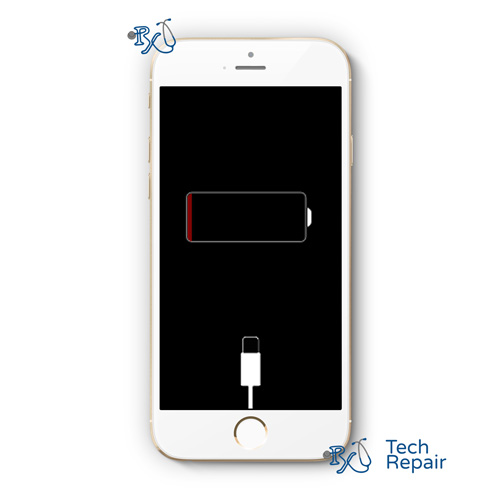
Step 1: Check Your Battery Health Percentage
Go to Settings > Battery > Battery Health. (On some older versions of iOS this is called Battery Health & Charging.) You'll see two important readings:
- Maximum Capacity: how much charge your battery can hold compared to when it was new. A brand-new battery reads 100%. As the battery ages, this number goes down, and so does how long your iPhone lasts on a charge.
- Peak Performance Capability: whether your battery can still deliver enough power for your iPhone to run at full speed. Look for one of these messages:
- "Your battery is currently supporting normal peak performance." Your battery is fine.
- A message that your iPhone has had an unexpected shutdown and performance management has been applied. Your battery can no longer keep up, so iOS is slowing your iPhone down to prevent shutdowns. A new battery removes this slowdown.
- "Your battery's health is significantly degraded." with a Service recommendation. It's time to replace the battery.
What your Maximum Capacity means:
| Maximum Capacity | What it means |
| 90% - 100% | Healthy. Battery problems are most likely caused by apps or settings (see Step 3). |
| 80% - 89% | Normal wear. You'll notice shorter battery life, especially on older iPhones. Consider a replacement if it no longer gets you through the day. |
| Below 80% | Worn out. Apple considers a battery below 80% to need service. A replacement will make a big difference. |
Step 2: Check Your Battery Cycle Count (iPhone 15 and Newer)
On iPhone 15 and newer models, go to Settings > General > About and scroll down to Battery to see your Cycle Count, along with the battery's manufacture date and first use date. One cycle is using 100% of your battery's capacity, whether all at once or over several days. iPhone 15 and newer batteries are designed to keep about 80% of their original capacity after 1,000 cycles; earlier iPhones are designed for about 500 cycles.
Step 3: Rule Out Apps and Settings
A healthy battery can still drain quickly if something on your iPhone is using too much power. Before replacing your battery, check these:
- See which apps use the most battery: Go to Settings > Battery and scroll down to see battery usage by app for the last 24 hours or 10 days. If one app is using far more than it should, update it, limit its access to your location, or delete it.
- Give it a few days after an iOS update: After a major update, your iPhone re-indexes photos and data in the background, which can drain the battery faster for a few days. This is normal and goes away on its own.
- Update iOS: Go to Settings > General > Software Update. Updates often include battery and performance fixes.
- Check the usual battery drains: High screen brightness, Background App Refresh (Settings > General > Background App Refresh) and apps that always use your location (Settings > Privacy & Security > Location Services) all use extra power.
- Turn on Low Power Mode in Settings > Battery when you need your charge to last longer.
- Still not sure? Back up your iPhone and erase it (Settings > General > Transfer or Reset iPhone > Erase All Content and Settings), then set it up as new. If the battery still drains quickly on a clean setup, the battery itself is the problem.
Signs Your iPhone Battery Needs to Be Replaced
- Maximum Capacity is below 80%, or Battery Health shows a Service message.
- Your iPhone shuts off unexpectedly, even when it shows 20% or 30% left.
- The battery percentage drops suddenly, jumps around, or stays stuck.
- Your iPhone feels slow or laggy, and Battery Health says performance management has been applied.
- Your iPhone only works while plugged in.
- The screen is lifting or the back is bulging. This means the battery is swelling, which can be dangerous. Stop using and charging your iPhone and bring it in right away.
Get Your iPhone Battery Replaced at RxTech Repair
If your battery is degraded, a new battery will bring back all-day battery life and full performance, for a fraction of the cost of a new phone. Most iPhone battery replacements at our Mission Viejo shop take about 30 minutes, and no appointment is needed. Every battery replacement comes with a 2-week money-back guarantee and our one-year parts and labor warranty. Not in Orange County? We also accept mail-in repairs from anywhere in the US.
See iPhone battery replacement prices by model »
Questions? Call or text (949) 903-6452.
iPhone Battery Health FAQ
How do I check my iPhone battery health?
Go to Settings > Battery > Battery Health. Maximum Capacity shows how much charge your battery holds compared to when it was new, and Peak Performance Capability shows whether your battery can still run your iPhone at full speed.
What battery health percentage should I replace my iPhone battery at?
Apple considers a battery below 80% Maximum Capacity to need service. Many people replace it sooner, around 85%, if their iPhone no longer lasts through the day.
How do I check my iPhone battery cycle count?
On iPhone 15 and newer, go to Settings > General > About and scroll to Battery to see the Cycle Count. Older iPhones don't show the cycle count in Settings.
Why does my iPhone shut off at 20% or 30%?
A worn battery can't deliver enough power when your iPhone needs it, so the phone shuts down early to protect itself. Check Settings > Battery > Battery Health; if it mentions an unexpected shutdown or a Service recommendation, the battery should be replaced.
Will a new battery make my iPhone faster?
If Battery Health says performance management has been applied, yes. iOS slows down iPhones with worn batteries to prevent shutdowns, and a new battery removes that slowdown.
How long does an iPhone battery replacement take at RxTech Repair?
Most iPhone battery replacements take about 30 minutes at our shop in Mission Viejo, CA, and no appointment is needed.
RxTech Repair
27001 La Paz Road
Suite 402B
Mission Viejo, CA 92691